Story guide • Updated July 10, 2026
Faye in God of War Ragnarok: Scenes, Prophecy and Ending
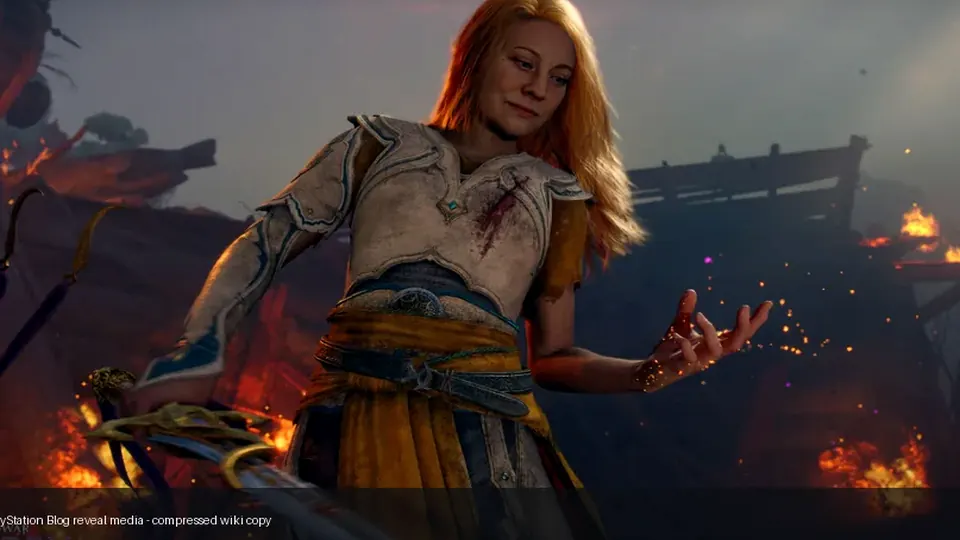
Faye does not return as a normal living party member in God of War Ragnarok. She appears through memory, dreamlike conversations, prophecy context and the choices she left behind, and those scenes quietly explain why Kratos can become a different kind of god.
Quick answer
Faye matters in Ragnarok because the story tests whether Kratos can honor her without hiding from prophecy
In God of War Ragnarok, Faye is most important as a memory with agency. The game uses her scenes with Kratos to show a marriage built on hard truths, not just grief. She is gone before the Norse saga begins, but Ragnarok keeps asking what she knew, what she chose not to tell Kratos, and how much of the family journey she shaped.
The short version is simple: Faye appears in dream and memory sequences, her Jotnar identity explains Atreus' connection to Loki, and her decisions push Kratos away from the old prophecy that treats him as a destroyer. She does not become a secret final boss, a resurrected companion, or a fully playable Ragnarok character.
This page is separate from the broader Faye guide because the search intent is narrower. Players looking for Faye in God of War Ragnarok usually want the scene order, the prophecy meaning, whether she appears in the ending, and how those moments connect to Atreus, Angrboda, the Giants and the announced Laufey-focused story.
- Character focus
- Faye / Laufey
- Game context
- God of War Ragnarok memories and prophecy
- Best answer
- She guides the story through memory, not resurrection
- Avoid claiming
- Secret playable Faye or confirmed resurrection
Scene map
What each Faye moment does for the Ragnarok story
Use this table to separate confirmed story function from fan theory.| Moment or topic | What happens | Why it matters |
|---|---|---|
| Kratos' memories of Faye | Ragnarok returns to private conversations between Kratos and Faye rather than treating her only as the dead wife from the 2018 opening. | Those scenes make grief active. Kratos is not just remembering loss; he is still being challenged by the values Faye taught him. |
| The Jotnar prophecy problem | Faye's Giant identity and her knowledge of prophecy frame Atreus' Loki path and Kratos' fear of repeating violent patterns. | The story is not about prophecy being a fixed script. It is about what the family does when prophecy becomes pressure. |
| Atreus and the Giants | Atreus looks for answers about Loki, the Jotnar and his mother's people, while Faye's choices remain the reason he has that heritage. | Faye connects the family drama to the larger mythic plot without needing to appear in every scene. |
| Kratos' ending direction | By the end, Kratos can imagine a role beyond fear and destruction. | Faye's influence helps make that change credible: she prepared him to choose responsibility instead of old habit. |
Visual reading
Three visual points for the Faye Ragnarok intent
The page uses existing site media and explanatory visuals rather than pretending to have new official Ragnarok screenshots.
Ragnarok builds on the ashes journey
Faye's death is not repeated for shock value. Ragnarok uses the earlier ashes journey as emotional groundwork, then moves to the question Kratos avoided: what kind of future did Faye believe the family could still choose?
That is why a scene list by itself is thin. The better reading is to follow how each memory changes Kratos' understanding of choice, trust and responsibility.
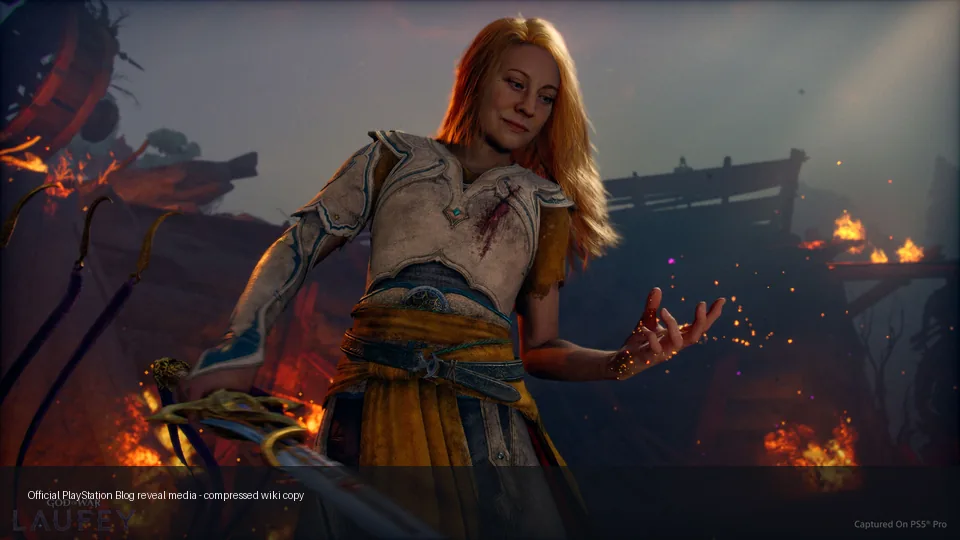
Faye's past is now a future story hook
Ragnarok gives Faye enough emotional weight that a Faye-led story can feel like expansion rather than a random spin-off. The important bridge is not resurrection. It is unfinished context: her Jotnar knowledge, her choices before death, and what she protected.
When future media adds confirmed scenes or gameplay, this page should link forward without rewriting Ragnarok as something it did not show.
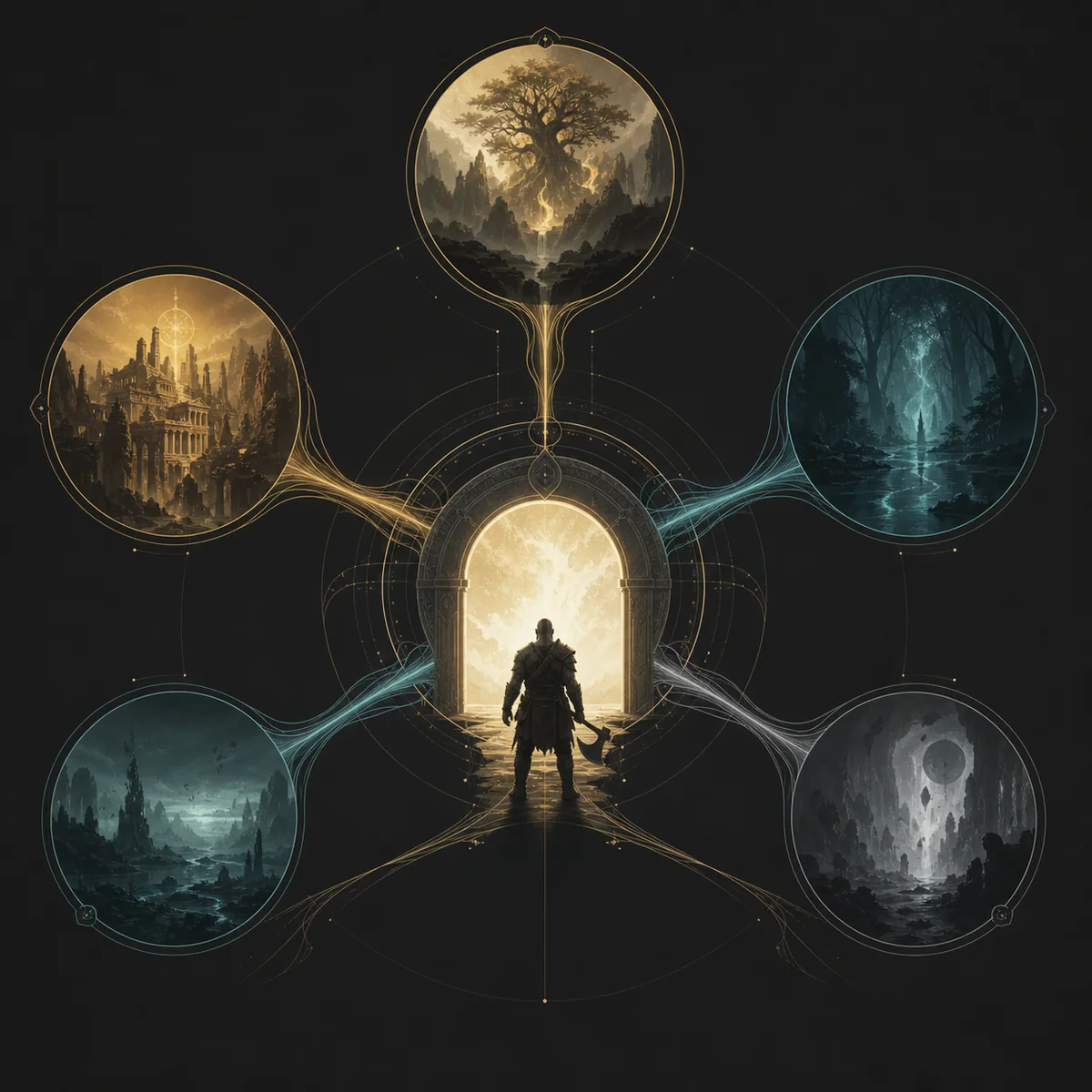
The Everywhen bridge should stay separate from Ragnarok canon
The Everywhen is useful for explaining why new Faye material can exist after her funeral, but it should not be used to retroactively claim that Ragnarok secretly revived her.
A clean fan wiki keeps the boundaries readable: Ragnarok uses memory and prophecy; the Laufey-focused material can explore what comes next or what was unseen.
Story role
How Faye changes the meaning of Ragnarok without being on screen constantly
Her role is structural: she shapes decisions, reveals boundaries and forces Kratos and Atreus to act rather than simply obey fate.Faye turns prophecy into a choice problem
The strongest Ragnarok reading is not that Faye predicted every move perfectly. It is that she understood enough to prepare the family for a moment when prophecy would feel unavoidable. That makes her a planner, not a puppet master.
This matters for Kratos because he has spent much of the series fighting what gods and fate demand from him. Faye's memory points to another answer: know the danger, then choose differently anyway.
Atreus inherits more than a secret name
Atreus learning about Loki and the Giants is not just a lore twist. It is a family inheritance from Faye, and Ragnarok makes that inheritance active by pushing him toward questions Kratos cannot answer for him.
That is why Faye scenes should be read beside Atreus' Giant-related chapters. They explain why his identity is personal before it becomes mythological.
The ending works because Faye prepared Kratos for it
Kratos' later self-control would feel sudden if Ragnarok treated Faye only as a memory object. Instead, her scenes show a relationship where she expected him to listen, change and trust.
By the time the ending asks whether Kratos can be seen as something other than a destroyer, Faye's influence has already made that possibility emotionally believable.
Timeline
A spoiler-aware Faye timeline for Ragnarok readers
The exact player experience is best preserved by grouping Faye's role by function rather than turning every memory into a transcript.
Faye hides and prepares
She lives with Kratos and Atreus, protects the family, and leaves instructions that start the ashes journey.
Her final wish reveals the larger path
The journey to scatter her ashes exposes her Laufey identity, Giant knowledge and the importance of Atreus' name.
Memory becomes guidance
Ragnarok uses Faye to test whether Kratos can accept truth, trust Atreus and resist the old violent prophecy.
Her story remains open for focused material
Future Faye/Laufey material can explore her past, the Everywhen or unseen choices without changing what Ragnarok already showed.
Sources and limits
How this page handles canon, wiki summaries and search demand
For canon claims, this page relies on the released God of War games, official PlayStation/Santa Monica channels and clearly labeled wiki-style reference pages. Community explanations are useful for discovering questions, but they are not treated as proof when they add details the game does not state.
Similarweb keyword generator data showed stronger demand around Faye God of War, God of War Faye, God of War Ragnarok Faye, and lower-volume question terms such as how strong Kratos' wife Laufey was. The Ragnarok page is justified because the intent is scene and story interpretation, while the strength query fits better as an FAQ and internal-link anchor.
Do not overclaim
- Do not say Faye is resurrected in Ragnarok.
- Do not describe a secret playable Faye chapter unless official material confirms it.
- Do not merge Ragnarok memory scenes with Everywhen speculation.
- Use the strength question as an FAQ, not a separate page yet.
- Update this page only when source-backed details change.
FAQ
Faye in God of War Ragnarok FAQ
Is Faye in God of War Ragnarok?
Yes. Faye appears through memory and dreamlike scenes that deepen Kratos' story and explain the family's relationship to prophecy. She is not presented as a normal living companion.
Does Faye come back to life in Ragnarok?
No. Ragnarok uses memory, grief and prophecy context. It does not state that Faye is resurrected or secretly alive in the ordinary sense.
What does Faye want Kratos to learn?
Faye pushes Kratos toward trust, responsibility and the courage to choose a better path even when prophecy and past violence make that feel impossible.
Why is Faye important to Atreus in Ragnarok?
Faye is Atreus' Giant mother and the source of his Laufey/Loki heritage. His search for the Giants and his identity is inseparable from what she left behind.
How strong was Kratos' wife Laufey?
The games present Faye as a formidable Giant warrior and an unusually important strategist, but they do not provide a clean power-scaling number. Her strength is best understood through her influence, preparation and the respect other characters attach to her.
Should this be read before the main Faye guide?
Read the main Faye guide first if you need the basic identity answer. Use this Ragnarok page when you specifically want her scenes, prophecy role and ending context.