Entity evidence guide • Updated August 1, 2026
God of War Laufey Begtse: What the Reveal Confirms
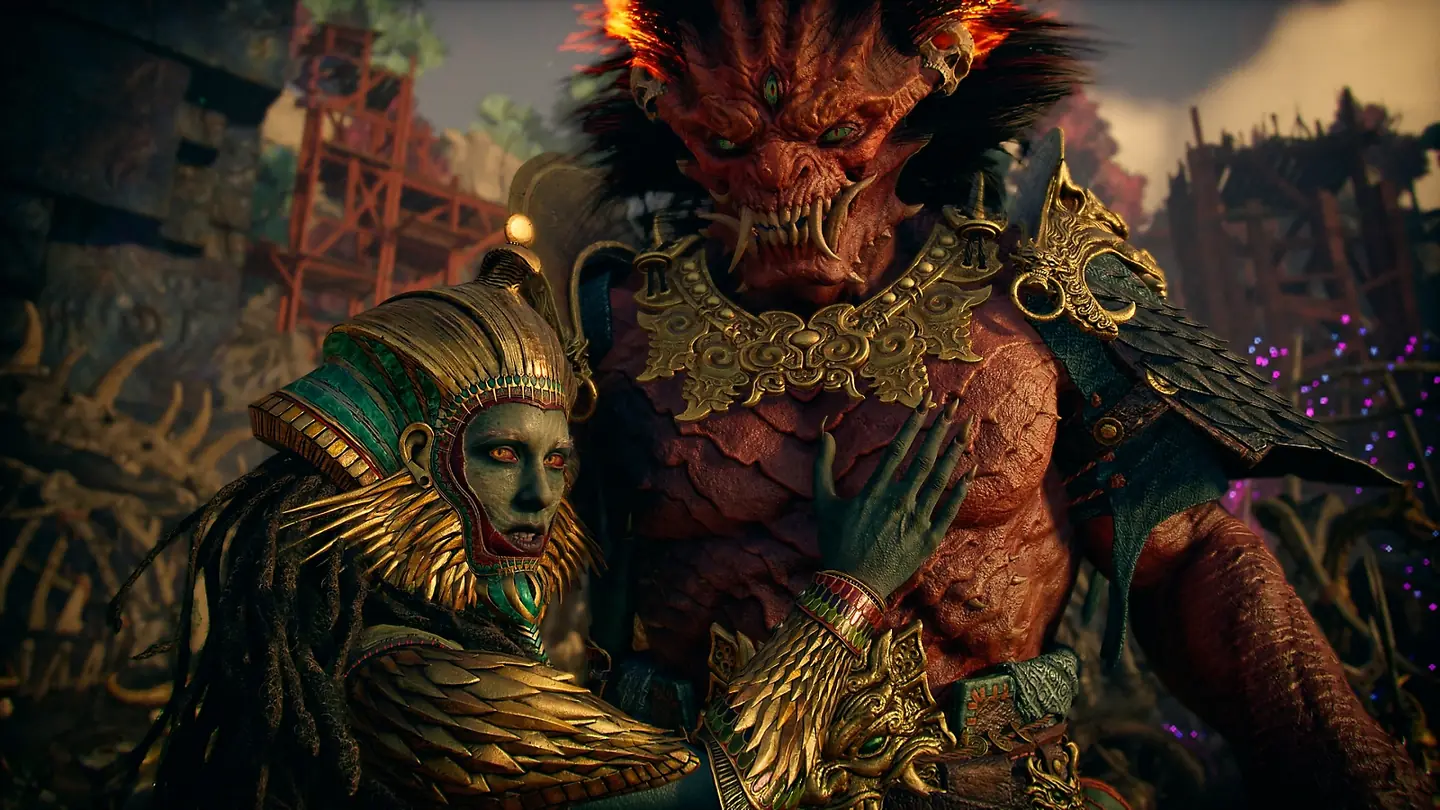
The red armored figure beside Sekhmet is widely identified as Begtse, a figure associated with Tibetan Buddhist and Mongolian traditions. This guide separates the visual evidence from what PlayStation has actually named or confirmed.
Quick answer
Is Begtse in God of War Laufey?
The safest answer is: the reveal shows a red, armored, fierce-looking figure that strongly resembles Begtse, and current coverage commonly uses that name. PlayStation's official first-look material confirms that Faye enters the Everywhen, an afterlife where gods and creatures from many mythologies can appear, but the accessible copy does not yet publish a complete named roster.
That distinction matters because a recognizable design can support an identification without proving every story detail. The reveal can make Begtse the best current label for the figure; it cannot yet confirm whether he is a boss, an ally, a guide, a prisoner, or a temporary opponent.
This page therefore uses three confidence levels: official premise for what PlayStation states directly, strong visual identification for the Begtse reading, and speculation for role, dialogue, encounter order, or final in-game name.
- Primary query
- God of War Laufey Begtse
- Reveal status
- Strong visual identification
- Setting
- The Everywhen
- Role
- Not officially announced
Primary visual source
Watch the official reveal before reading theories
The PlayStation gameplay reveal is the clearest way to inspect the figure's armor, color palette, weapon language and relationship to the surrounding scene.Visual point 2: official PlayStation gameplay reveal. Pause on the scene, but do not turn a silhouette into a confirmed character biography.
Evidence matrix
God of War Laufey Begtse: confirmed, supported and unknown
The status column keeps cultural context, visual identification and game canon in separate lanes.| Claim or clue | Evidence source | What the reveal supports | Safe conclusion |
|---|---|---|---|
| The Everywhen | PlayStation first-look material | Faye travels through an afterlife associated with gods and encounters figures from multiple mythologies. | Official premise; the final named roster is not complete. |
| Red armored guardian | Official reveal frame and visual comparison | The mask, red armor, fierce face, staff and protective silhouette closely match imagery commonly associated with Begtse. | Strong visual identification; explicit in-game naming is still pending. |
| Begtse's traditional context | Himalayan and Buddhist art references | Traditional depictions help explain why viewers connect the figure with a wrathful protector or war deity. | Useful cultural context, not proof of the game's final biography. |
| Boss or enemy theory | Trailer interpretation | A threatening pose and combat-ready design can suggest danger, but a trailer does not establish allegiance or encounter type. | Speculation until official story or gameplay details say more. |
| Final name and dialogue | Not yet available | No accessible first-party caption or cast listing on this page settles the figure's complete identity. | Keep open and update when a first-party source names him directly. |
How to read the clue
Why the Begtse identification is useful but not final
A good game wiki can give readers the most likely answer without pretending that early promotional evidence is a completed codex entry.The iconography points toward Begtse
The red armor, fierce facial treatment, staff-like weapon and guardian posture make Begtse a stronger reading than a random unnamed demon. The visual comparison is the reason the keyword is worth a dedicated guide.
The game may adapt the figure
Santa Monica Studio can borrow a name, silhouette or mythic association while changing personality, powers, relationships and narrative role. Traditional sources explain resemblance; they do not dictate the game's canon.
Do not skip from appearance to boss status
The figure could be hostile, allied, neutral or temporarily opposed to Faye. Until a trailer, article, dialogue line, credit or final game codex gives a role, label the conclusion as unknown.
Context visuals
Three visual points for the Begtse search intent
Official media carries the game evidence; the conceptual illustration is clearly marked as explanatory and is not presented as gameplay.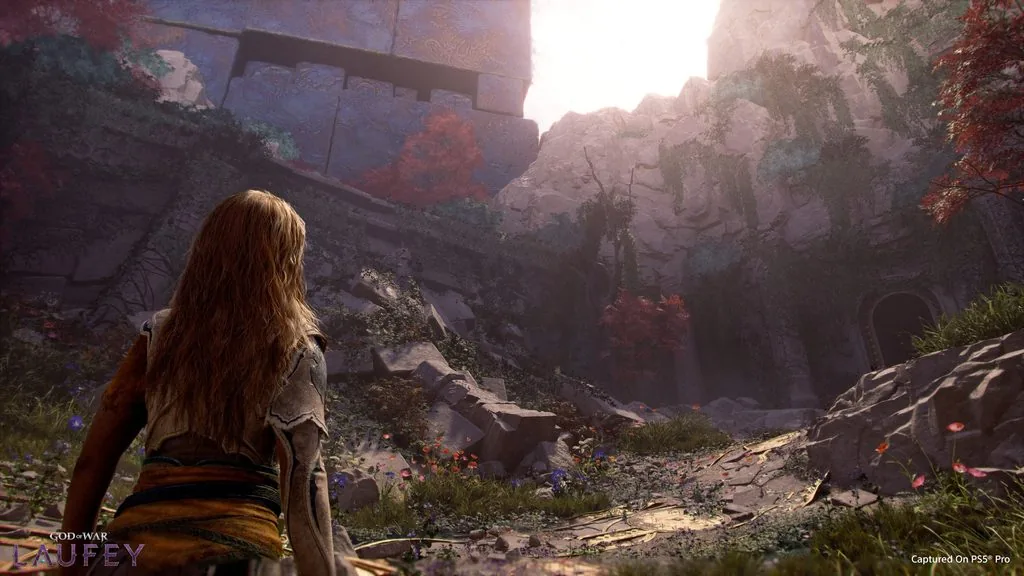
The Everywhen explains why distant traditions can meet
The official setting gives the story a plausible meeting place for gods and creatures from different mythologies. It is safer to describe a shared afterlife than to claim that the source traditions form one historical family tree.
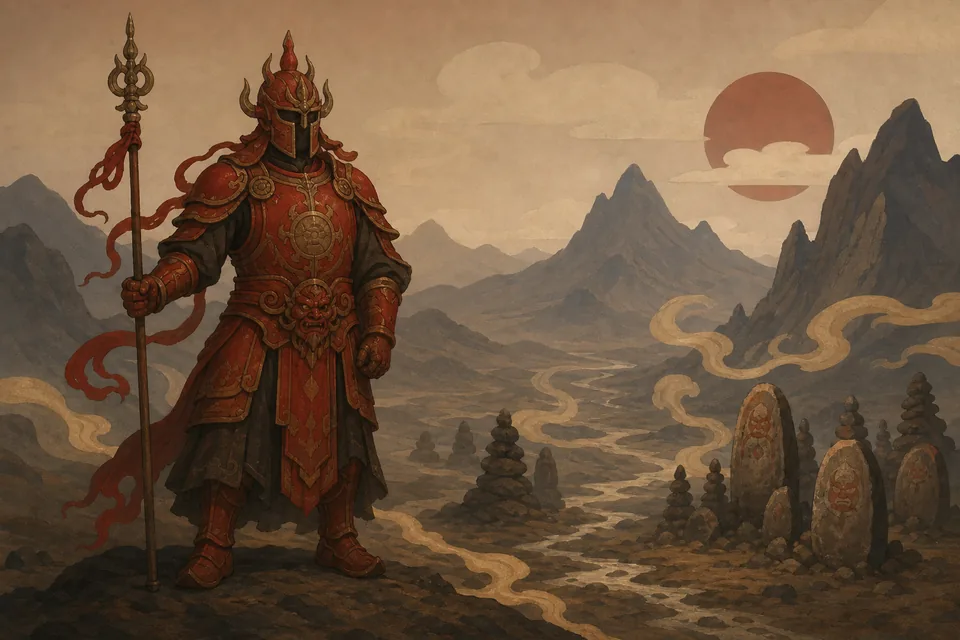
A respectful cultural-context illustration
This editorial illustration helps readers understand the broad red-armored guardian imagery discussed in the article. It is a concept visual, not a screenshot, not official key art and not a claim about the final game model.
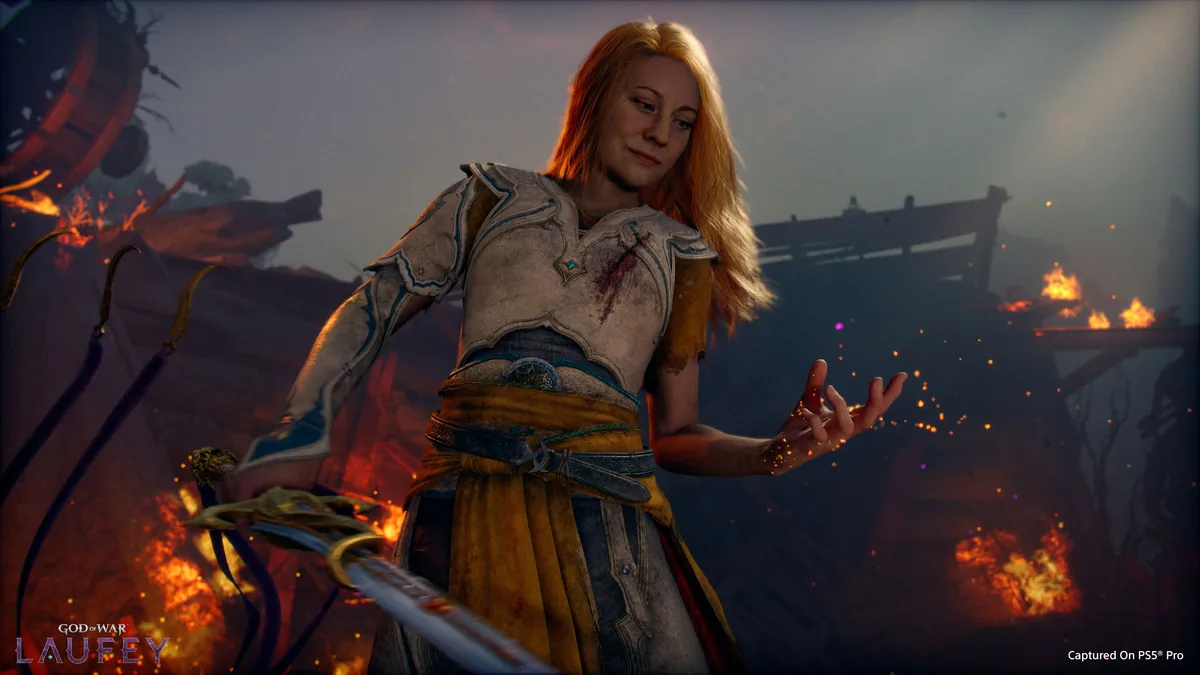
The reveal supplies clues, not a finished encyclopedia
The trailer can show costume, scale, weapons and atmosphere. It cannot by itself confirm whether this figure has a named boss phase, a speaking role, a faction, or a lasting relationship with Faye.
Source-safe interpretation
What readers really want to know about Begtse
The game-specific query is narrower than the broad word Begtse. Someone searching for Begtse in God of War Laufey is usually trying to identify the figure in the reveal, understand why the design looks like a wrathful guardian, and learn whether the name is official. That is why this page leads with visual evidence and status labels instead of opening with a long general mythology essay.
The broad keyword Begtse is still useful, but it has a different center of gravity. General results can discuss traditional religious art, pronunciation, regional history or different spellings. Those subjects belong in a short context section and should never be allowed to overwrite the game page's main boundary: what the God of War Laufey reveal supports today.
This page also does not replace the Gods and Pantheons guide. The broader guide maps the multi-mythology premise and compares several figures. This page is the entity-level follow-up for Begtse: identification, cultural context, confidence, and the update path for a future official name or role.
Update checklist
What would turn the Begtse theory into canon?
The page should change when a first-party source adds an explicit name, role, dialogue line or in-game codex entry. Until then, the confidence labels should remain visible.
PlayStation or Santa Monica Studio names the figure
Add the official name to the title, evidence table, FAQ and image captions only when the source connects it to this exact on-screen figure.
A trailer states ally, enemy or boss status
Update the role column and related links, but keep traditional mythology and game-specific story claims separate.
Dialogue or a codex explains the relationship
Add encounter order, motive or faction information only when the source is clear enough to distinguish fact from interpretation.
The finished game publishes the final model and name
Replace promotional-era wording with in-game terminology, spoiler-aware screenshots and direct credits or codex references.
Sources and boundaries
Use first-party material for canon and specialist references for context
The official PlayStation game page and first-look article provide the canon layer for the Everywhen, Faye's mission and the multi-mythology premise. The official gameplay reveal is the primary visual source for the figure discussed here.
Himalayan and Buddhist art references explain why the design is commonly compared with Begtse. They are context sources, not evidence that Santa Monica Studio has copied every traditional attribute or finalized the same biography.
Community identifications can help readers understand the search landscape, but they should remain labeled as interpretations until a first-party source names the character directly.
Confidence labels used here
- Officially confirmed: stated by PlayStation or shown with direct first-party context.
- Strong visual identification: the design closely matches a known figure, but explicit naming is still missing.
- Unidentified: visible in the reveal, yet the exact name, mythology or role remains open.
- Speculation: a theory that should not be written as a fact.
Begtse FAQ
Questions about Begtse in God of War Laufey
Is Begtse officially confirmed in God of War Laufey?
The figure is strongly identified as Begtse because of its red armored guardian-like design and the way current coverage compares it with traditional imagery. The safest wording is strong visual identification until PlayStation or Santa Monica Studio names the figure directly.
What does Begtse look like in the reveal?
The reveal shows a large red armored figure with a fierce mask-like face, ornate armor and a staff-like weapon. Those visual details support the Begtse comparison, but they do not confirm a final model sheet or complete ability list.
Is Begtse a boss or enemy?
That is not confirmed on the evidence currently available. The design can look threatening, yet the figure could be a boss, enemy, ally, guardian, prisoner or another encounter type.
What is Begtse associated with in traditional sources?
Specialist Buddhist and Himalayan art references commonly present Begtse as a wrathful protector or war-associated figure. Use that background to understand the visual language, not to assume the game's personality or story role.
Why is Begtse shown with Sekhmet?
The Everywhen is designed as a meeting place for gods and creatures from different mythologies. Their shared scene supports the game's multi-pantheon framework; it does not prove that their original traditions have been merged into one family tree.
Where should I read next?
Use the Gods and Pantheons guide for the wider roster, the Sekhmet guide for the lioness-headed figure, the Everywhen guide for the setting, and the trailer breakdown for scene-by-scene visual evidence.