Timeline and canon guide • Updated August 16, 2026
God of War Laufey Timeline: When the Story Takes Place
The safest God of War Laufey timeline starts with Faye's life before the modern games, moves through God of War (2018) and Ragnarök, then reaches the post-funeral Everywhen setting. The full chapter order is not confirmed.
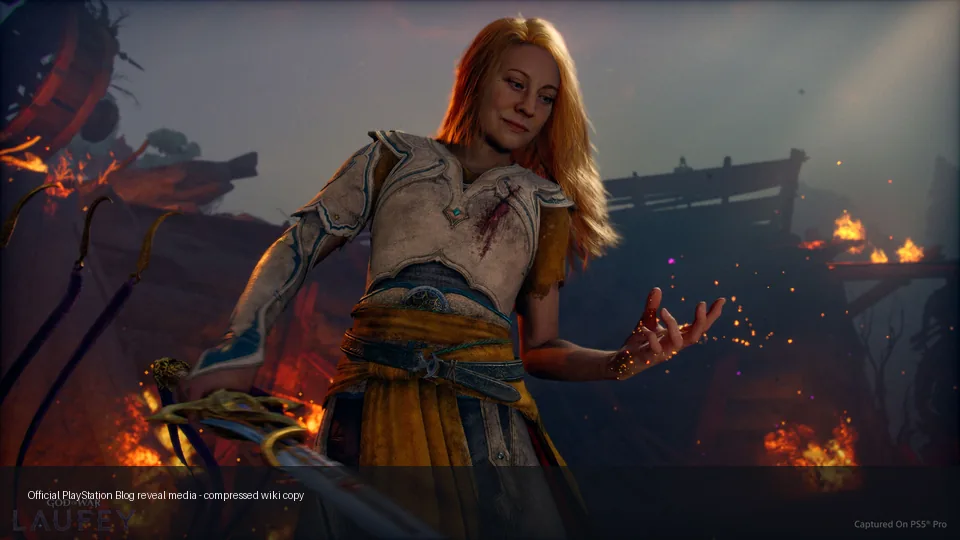
Quick answer
God of War Laufey takes place after Faye's funeral, but the complete chronology is still open
The confirmed starting point is simple: Faye's new story begins after her funeral. She awakens in the Everywhen, the afterlife of the gods, and is drawn into a mission connected to the future she prepared for Kratos and Atreus. That places the playable story after the events that made Faye's death and legacy central to the modern God of War saga.
A timeline guide still needs a boundary. Official material has not published a year-by-year chronology, a complete order for every flashback, or the exact amount of time between Faye's funeral and her arrival in the Everywhen. The table below separates firm story anchors from details that should remain unknown instead of turning trailer editing or fan theories into canon.
- Primary question
- When the new Faye story takes place
- Earliest anchor
- Faye's life before the modern games
- Released context
- God of War (2018) and Ragnarök
- New-game opening
- After Faye's funeral
- Main unknown
- Full chapter order and ending
Confirmed chronology
The God of War Laufey timeline in six safe anchors
These anchors answer the search intent without pretending that the unreleased story already has a complete mission list.| Timeline point | What is confirmed | What not to assume |
|---|---|---|
| Faye before 2018 | Faye's life as a Giant warrior, mother, Kratos' wife and protector of Jotnar interests comes before the modern playable story. | The games do not provide a complete dated biography or every event in order. |
| God of War (2018) | Faye's funeral and the journey to spread her ashes establish the emotional starting point for the modern saga. | The new game is not automatically a replay of the 2018 campaign from Faye's viewpoint. |
| Ragnarök context | Memories, murals, prophecy and Atreus' heritage expand what players understand about Faye's choices and legacy. | Ragnarök context is not a published chapter list for the new game. |
| Faye's funeral | Official setup places the new Faye-led story after the funeral. | The exact interval between the funeral and the first playable scene is unknown. |
| The Everywhen | Faye awakens in the afterlife of the gods, a setting that can connect different mythological traditions. | It should not be treated as a normal Midgard location or a fully mapped realm yet. |
| God of War Laufey campaign | Faye is the active lead who must protect the future she created for Kratos and Atreus. | Mission order, final villain, ending and campaign length remain unconfirmed. |
Visual evidence
Three official visuals that clarify the chronology
These are existing official-source media tracked by the site. They illustrate the setting and reveal context; they do not invent scenes from an unreleased timeline.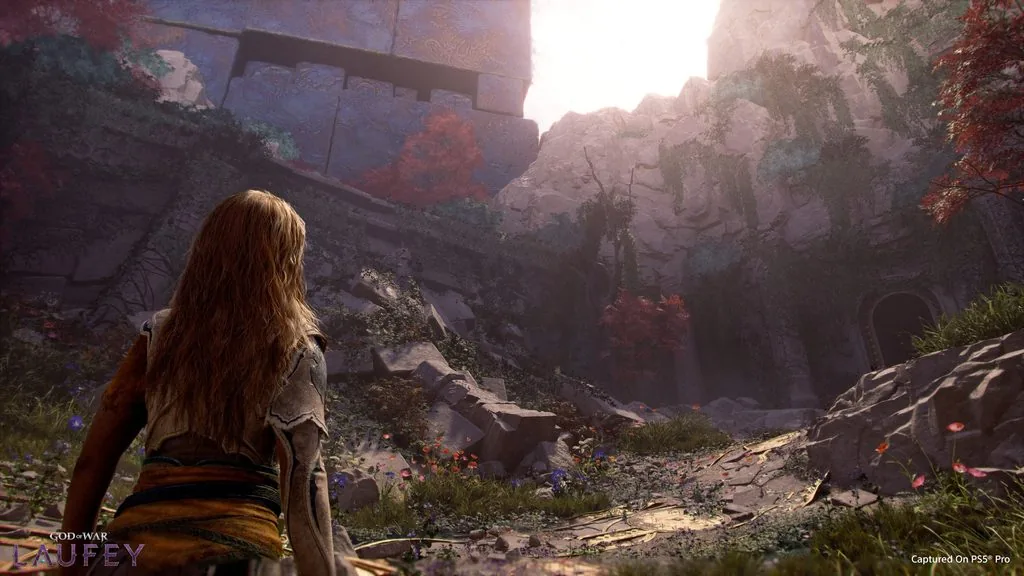
The Everywhen is a setting anchor, not a calendar date
The Everywhen matters to the timeline because it gives Faye a place to act after the funeral without undoing the grief that defines the opening of the modern saga. Official descriptions frame it as an afterlife of the gods and as a space where mythological traditions can meet.
That tells us where the new story begins in broad terms, but it does not tell us how long Faye has been gone, how time behaves there, or whether every trailer location belongs to one continuous route. Those questions belong in the unknown column until first-party material answers them.
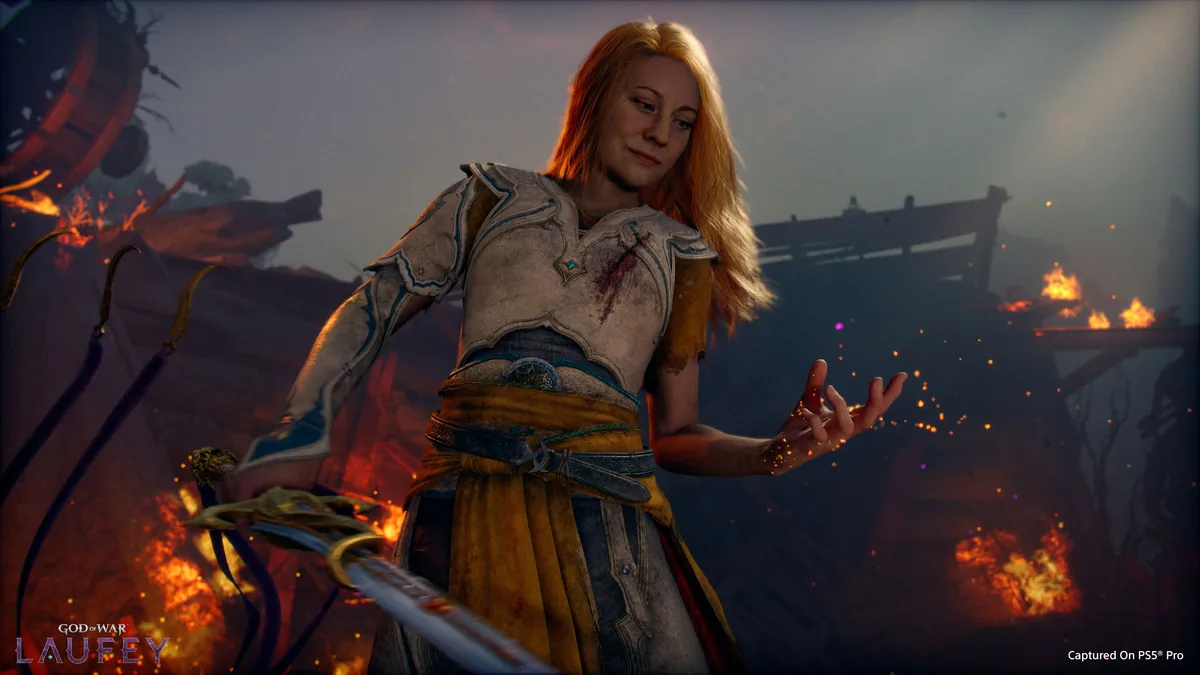
The reveal is evidence of a new chapter, not a full order of events
The gameplay reveal places Faye in motion with her sword, Golden Hand abilities and unusual companions. It supports the conclusion that the game is an active Faye-led continuation rather than a short memory sequence attached to Kratos' story.
Edited footage can still move between locations, characters and time layers for presentation. A responsible timeline therefore records the setting, protagonist and family stakes as confirmed while avoiding claims about the first boss, the final destination or the order of every shot.
How the chronology fits together
What comes before the new God of War Laufey opening
The timeline is easier to follow when biography, released-game context and the announced new story are kept in separate layers.1. Faye's earlier life is the foundation, not a complete prequel script
Before players reach the new opening, Faye has already lived through a long and partly hidden history. She is connected to the Giants, the protection of Jotnar knowledge, the resistance to Odin and the family she builds with Kratos. The released games reveal those facts through memories, murals, dialogue and consequences rather than through one continuous biography.
For timeline purposes, that means Faye's earlier life belongs before the modern playable events, but many individual scenes cannot be placed on an exact date. A future game may fill those gaps, yet this page should not place an unshown battle or meeting on the calendar simply because it would make a neat sequence.
2. God of War (2018) gives the saga its public starting point
God of War (2018) opens after Faye's death and turns her final wishes into the journey that introduces players to the family story. Kratos and Atreus carry her ashes toward the highest peak, while discoveries about her Giant identity change how the audience understands the world around them.
This is an important timeline anchor, but it should not be used to claim that every part of Faye's personal history happened immediately before the game. The 2018 story is the audience's starting point, not a complete record of the decades that came first.
3. Ragnarök adds context to Faye's choices and legacy
God of War Ragnarök expands the picture through memory sequences, prophecy, Giant clues and the way Faye's decisions continue to shape Kratos and Atreus. Those revelations help explain why a Faye-led story can carry forward after her death: her plans and relationships were already part of the saga's larger movement.
Ragnarök is therefore essential context for the new timeline, but it does not automatically reveal the sequence of the new campaign. A mural can establish a relationship, and a line of dialogue can confirm a past event, without proving where an unreleased mission sits relative to every other scene.
4. The funeral and the Everywhen connect the old and new stories
The new premise moves the viewpoint from the people grieving Faye to Faye herself. After her funeral, she awakens in the Everywhen and is given a mission tied to the future she created for Kratos and Atreus. This is why the page describes the game as a post-funeral continuation rather than a simple prequel.
The exact handoff remains deliberately limited. We do not yet know whether the opening shows the funeral directly, how Faye experiences the transition, or how much of the campaign takes place in the Everywhen. The strongest current timeline is the broad sequence, not a speculative chapter-by-chapter walkthrough.
Unknowns watchlist
What the current timeline cannot confirm
Searchers often want a complete chronology. The official premise supports a useful order of major anchors, but not a finished spoiler guide.
- No official year-by-year date has been published for Faye's earlier life or the Everywhen.
- The exact amount of time between Faye's funeral and her awakening is unknown.
- The mission order, chapter count, final villain and ending are not confirmed.
- Trailer editing should not be treated as proof that every shot is chronological.
- Release timing and platform status belong on the release tracker, not inside an invented timeline.
Source check
How this timeline separates canon from inference
The timeline anchors come from the official PlayStation God of War Laufey page, the PlayStation Blog first look and the released God of War story context already tracked by this wiki. First-party wording takes priority when a future update adds a more exact date, sequence or transition.
This is an independent fan guide, not an official chronology. Community discussions can suggest useful questions, but they are not used here to assign dates, name unrevealed missions or turn a trailer theory into a confirmed event.
Evidence labels used here
- Confirmed: the broad post-funeral and Everywhen setup.
- Context: released-game memories, murals and family consequences.
- Unknown: exact dates, chapter order, ending and unrevealed roles.
- Update rule: replace broad anchors only when first-party material supplies a clearer sequence.
FAQ
God of War Laufey timeline questions
When does God of War Laufey take place?
The announced story begins after Faye's funeral. She awakens in the Everywhen, but the exact time between the funeral and that awakening has not been confirmed.
Is God of War Laufey after God of War Ragnarök?
The new story is connected to the post-funeral future of Faye, Kratos and Atreus, so it follows the established modern saga in broad narrative terms. Official material has not published a complete chapter-by-chapter placement against every Ragnarök scene.
Is God of War Laufey a prequel?
It is better described as a Faye-led continuation that begins after her funeral, not as a straightforward prequel that happens entirely before God of War (2018).
Where does the Everywhen fit in the timeline?
The Everywhen is the afterlife of the gods and the setting where Faye awakens after the funeral. The full rules of time and the complete geography of that realm are still unknown.
Is the full God of War Laufey timeline confirmed?
No. The major anchors are confirmed, but the exact dates, mission order, campaign length and ending remain open until more first-party information is released.